

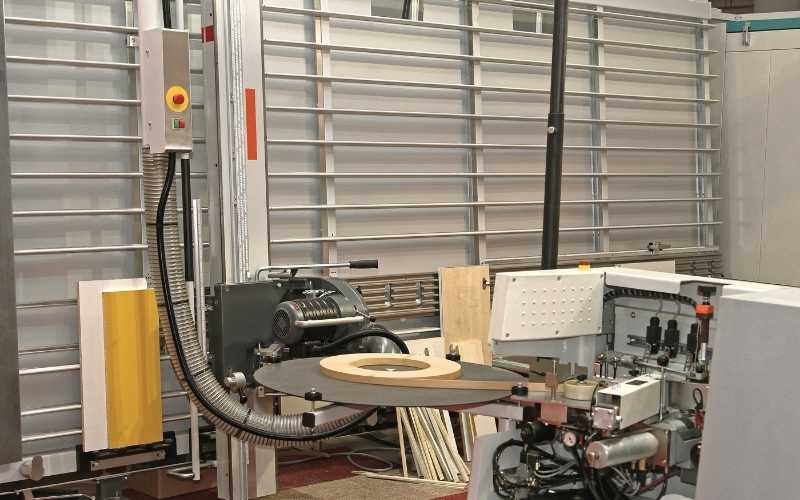
Track saws and panel saws are two woodworking saws that are both similar and different at the same time.
Although both can be used to carry out the same tasks, they’re quite different in terms of price, size and the type of cut or project each one can handle.
In this article, we’ll be comparing the two saws together, going through their similarities and differences to help you choose the right one for the project you have in hand.
Table of Contents
Track saw vs Panel saw: Differences and Similarities
Now, before going into the differences and similarities between the two, let’s first of all know what both are built for.
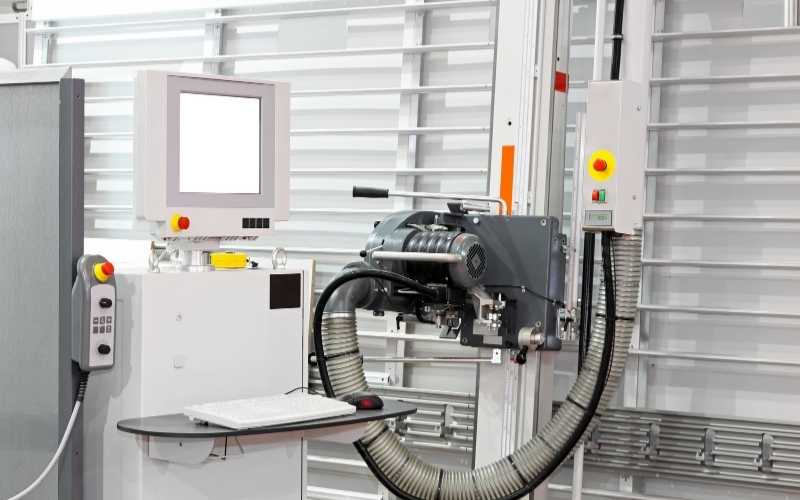
What is a panel saw
A panel saw is mainly used for both crosscutting and ripping large sheets of wood to size. They normally come in two types namely horizontal and vertical panel saws.
Both are quite large, however the vertical panel saw takes up less footprint compared to the horizontal panel saw which is just like a table saw but larger in size.
Panel saws are mainly used by cabinet shops to cuts wooden panels, sheet goods, solid wood, plywood, plastic sheets etc.
They’re also use by sign shops for cutting sheets of aluminum, plastic sheets, and wooden sheets for making their signs.
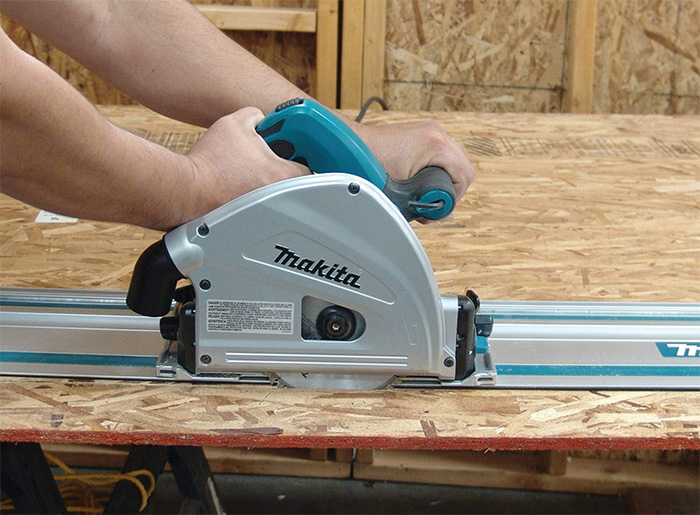
What is a track saw
Track saws on the other hand are like upgraded circular saws that come with slides or guide rails that help the user perform long rip or crosscut accurately.
You can just think of a track saw as a circular saw that comes with guide rails which provides tracks for you to make long rip cuts without deviating from the straight line of the rails.
Related: 10 Best Plunge-Cut Track Saw Reviews
Types of cut
The major similarity between a track saw and a panel saw is that both saws can be used for cross cutting and ripping large stocks of wood to size.
On the other hand, the major difference between them is that while a panel saw is a stationary equipment that needs to be mounted in one position during the cuts, a track saw can actually be moved around between cuts or positioned anywhere on the stock to make the cut.
Size and footprint
A panel saw will take up a large footprint in your workshop, especially the horizontal models, and they can’t be easily moved around. That is why they’re usually mounted on the floor or on the wall, depending on the type.
On the other hand, a track saw is smaller, can easily be moved around and takes up far less footprint. You take one with you to and from the jobsite.
Price
The panel saws tend to be very expensive compared to the track saws. But that will depend on the size of the panel saw that you want to use. The smaller panel saws are quite affordable when compared to a standard track saw.
Precision
Both saws offer high precision cuts when handled properly.
Mobility
This one is very obvious. Track saws are more mobile. You can take a track saw from one place or jobsite to the other easily.
You can’t say the same for a panel saw. It’s a stationary equipment, and thus not easy to move from one place or jobsite to another without dismantling it.
Final Verdict: Which one should you choose?
In this post, you have clearly seen the differences and similarities between panel and track saws.
Both saws can perform the same task quite easily. Although the panel saw is more expensive, it’s better for cutting larger pieces of wood like 4 foot by 8 foots pieces to smaller sizes.
It’s also fairly easier to operate compared to a track saw. Visit any home lumber center, you’ll often find one, especially the vertical ones mounted on the wall.
The track saws however are smaller, cheaper and offers better mobility. You can easily move a track saw from one jobsite to the other because it small compared to a panel saw which is stationary piece of equipment.
It’s also quite easy to buy as an individual because it’s less expensive. With this track saw vs panel saw comparison, we hope that you can now make an informed decision on the most suitable one for your project.
