

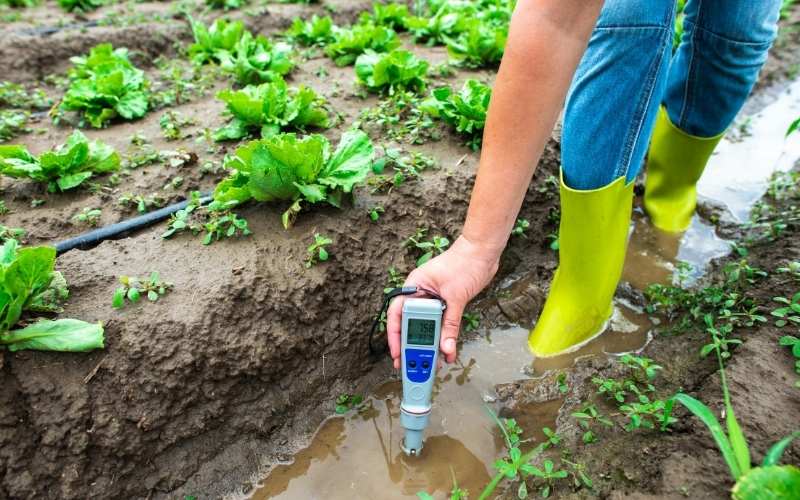
Having the right gardening tools tends to be the difference between someone who’s a serious gardener and someone who’s just pretending to be.
Without the right tools and equipment at your disposal, taking care of even the most simple tasks in the garden will turn out to be very difficult and time consuming.
Whether your garden has an impressive variety of fresh flowers, delicious veggies, or fruits, you need a range of tools to look after them. Those unwanted weeds, excessively grown grass, or dry leaves are skunk at a garden party.
Hence, your garden demands the right pampering and maintenance to look eye-pleasing year-round.
That’s why I’ve listed 32 most useful gardening tools and equipment you need to grow and maintain the beautiful flowers, fruits and plants in your backyard space!
Table of Contents
1. Wheelbarrow
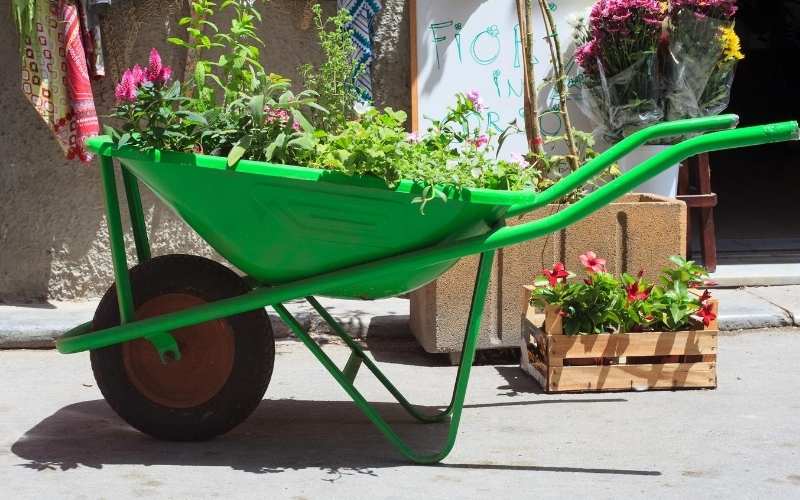
A wheelbarrow is one of the most useful gardening equipment for moving materials like soil, manure, composts and even seedlings for planting from one spot to the other.
You can even use it for carrying smaller tools like your trowel, scissors, hoe, spade and shovel along with you when carrying out your work.
When it’s time for harvesting, you can use it for moving your crops or produce from the farm to the farmhouse for storage.
Try to choose a wheelbarrow with knobby pneumatic tires instead of a no-flat tire, because the knobby pneumatic tires have more grip on loose soil and are better for navigating rough terrain.
A longer handle also provides good leverage, making it easier to move heavier materials with less effort.
2. Spade
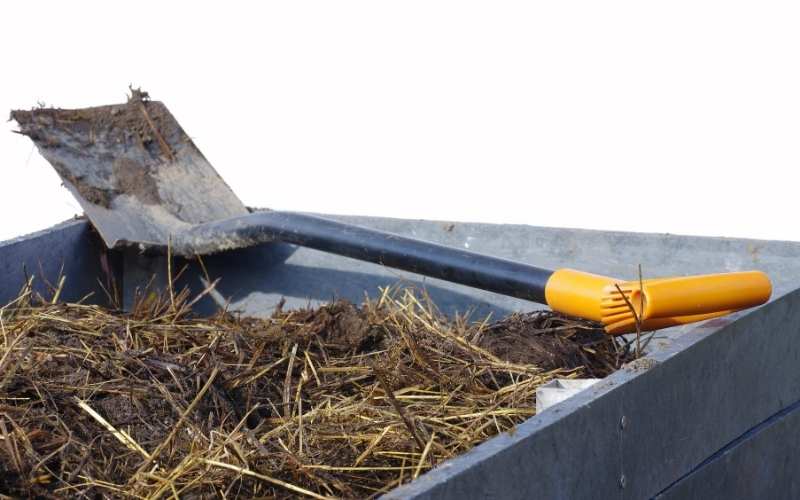
A spade is primarily used for digging and breaking down soil. It typically consists of a rectangular blade with a sharp edge and a long handle. The blade usually has a rest for the feet you can step on to drive the spade into the ground.
3. Shovel
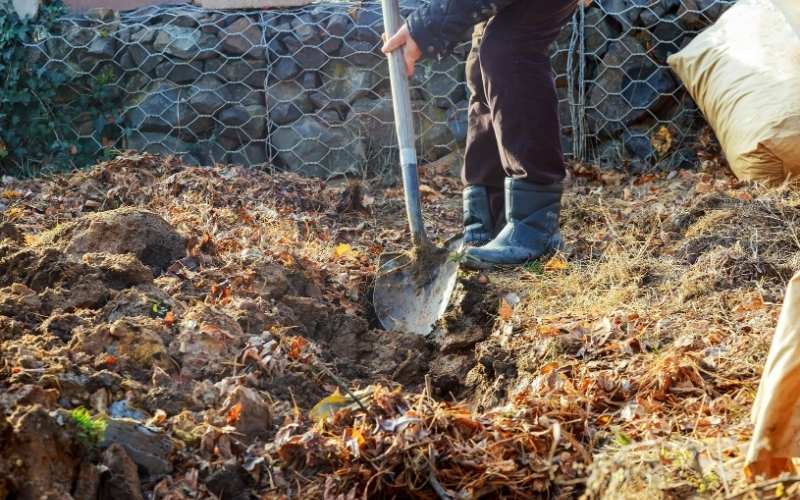
Many a times, people confuse a shovel with a spade. Even though they both look alike, a shovel has a broader curved blade for moving loose materials, while a spade has a sharpened flatter edge for digging through soil. Both can be used interchangeably though for digging up little trenches, digging holes and even for uprooting and transplanting small trees.
4. Garden Trowel
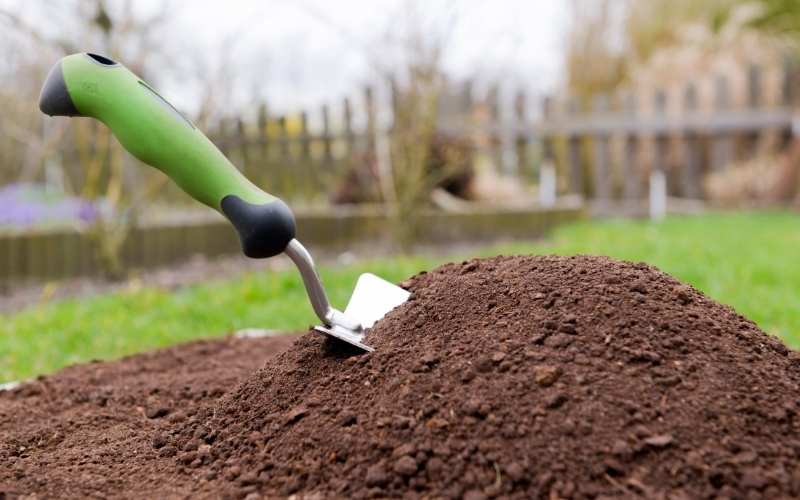
The trowel is one of the most used tool you’ll find in almost any gardener’s shed. It has an easy to grip handle with a well-fitted stainless steel blade.
You can use it to uproot weeds from the soil or to dig small holes for sowing seedlings.
5. Fork Hoe
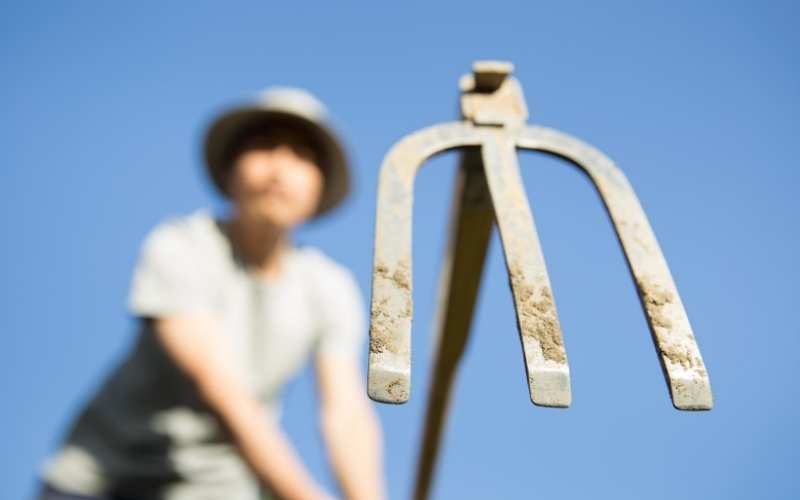
A fork hoe has digging blades at a right angle to the handle. Also popularly called the right-angled fork Azada, it has a three-pronged fork. Thus, the fork hoe gives better support to break up hard soil faster and with less effort.
6. Hoe
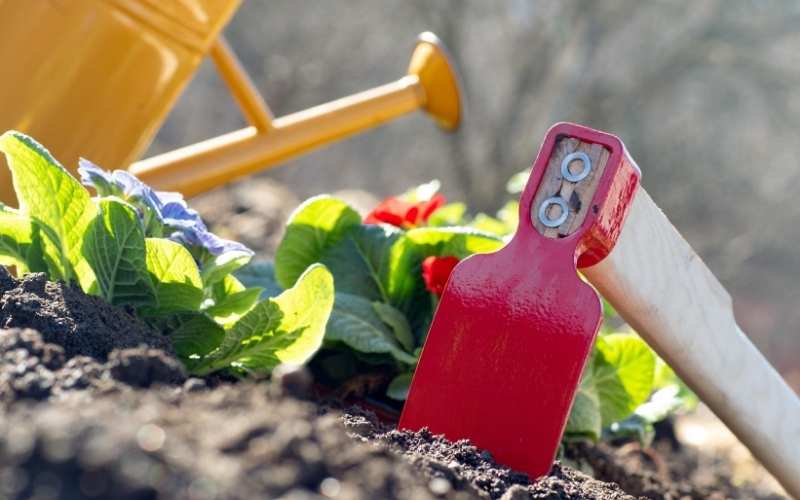
A garden hoe is the tool to edge your yard, nurture your soil, till it and even remove small weeds from the soil. It’s also a very useful tool you can use for planting and weeding.
7. Oscillating Hoe
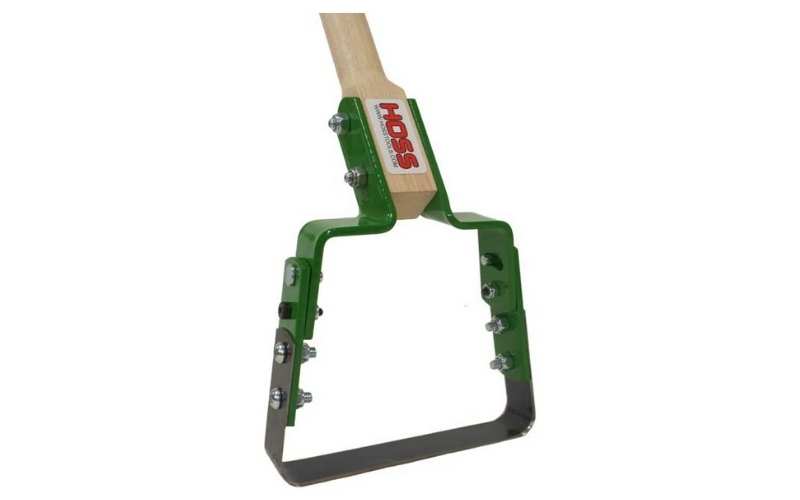
This is another type of gardening hoe that has a long handle. It’s also known as the looped hoe, and it’s very useful for cultivating loose soil, weeding and even aerating the soil. Due to its long handle, you can quickly dig a whole raised bed from the same position. Besides, its swivel action head allows to cut on the push and pull stroke while sharpening itself as it moves.
8. Winged Weeding Hoe
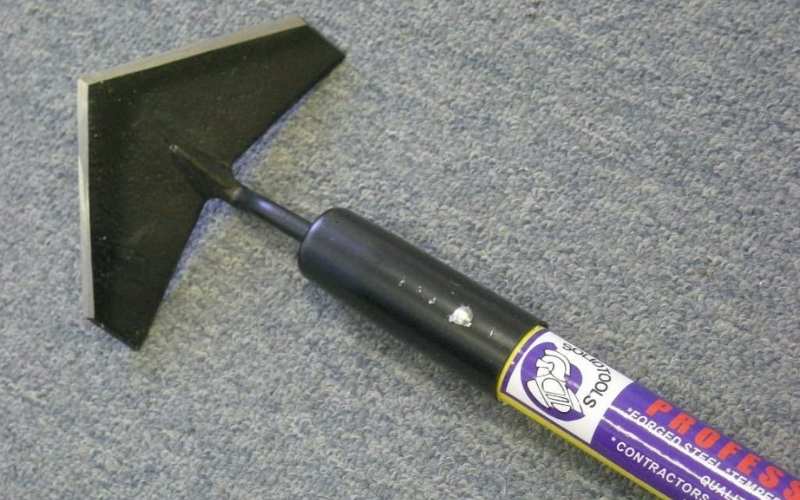
This is also called a winged floral scuffle. It’s a classic style hoe very efficient for removing weeds from the soil bed.
Just like every other hoe, it works best when both winged edges are sharp and ready to go. Although, once sharpened the first time, it will sharpen itself with each use.
9. Japanese Garden Landscaping Triangle Hoe
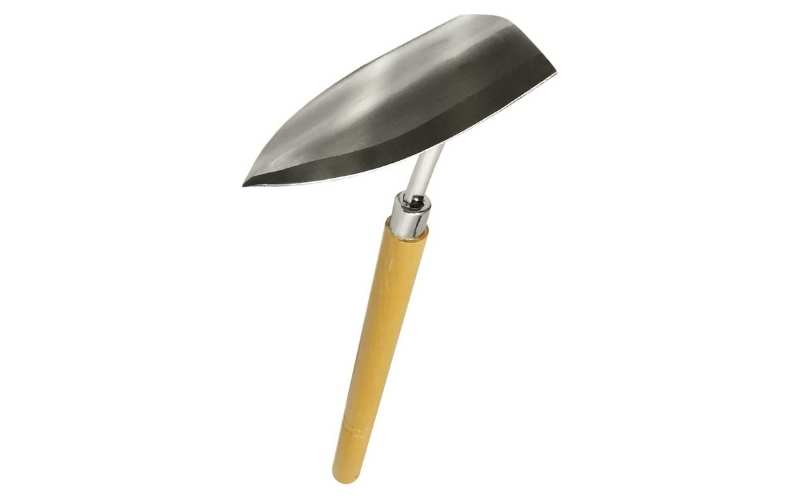
Weeding is one of the most tedious tasks when maintaining a garden, but making use of this Japanese garden landscaping triangle hoe might just make it much easier for you.
The shape makes it very fantastic for removing weeds both root and stern from the soil.
It allows you to access and remove weeds in really tight spots.
10. Garden Knife/Soil Knife
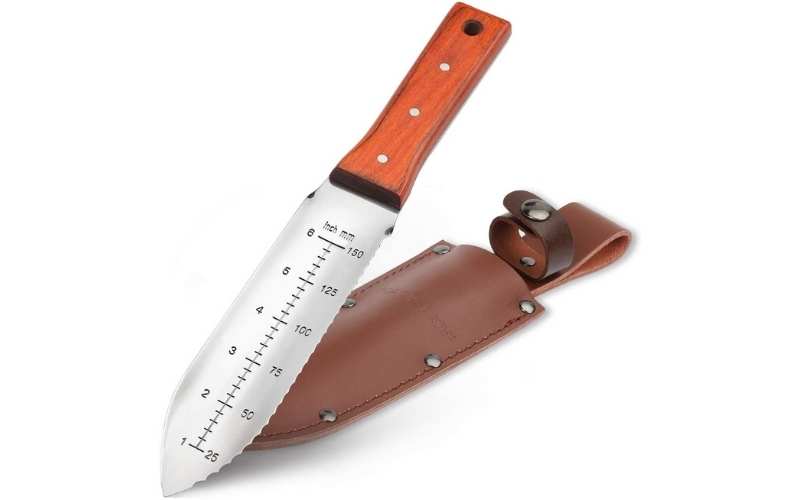
A garden knife is essential for cutting sticks, flowers, or string. It can also be used for trimming vegetable and fruit plants along with several other small jobs. Also called soil knife, they come in a compact size so you can conveniently tuck it in your pocket while you work.
11. Garden Rake
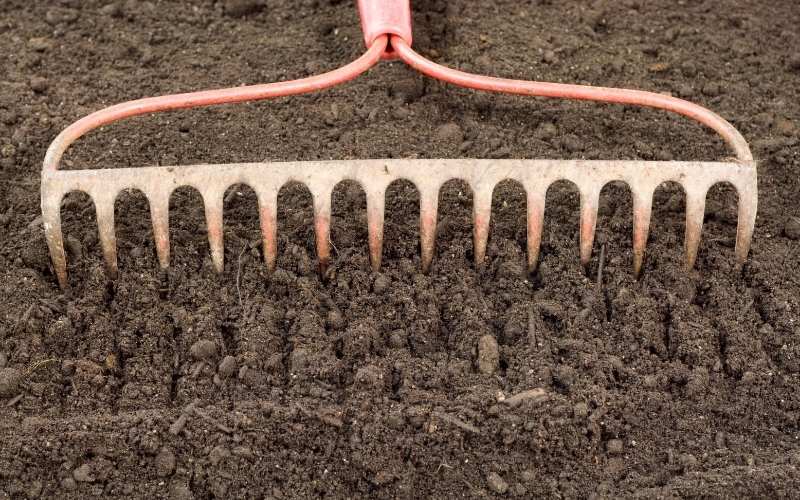
All those splattered stones, rocks, and clogs on the ground can be removed before planting using a rake. Apart from this, you can use it for leveling as well as smoothing the soil surface. Besides, it is a handy tool to gather debris such as weeds and leaves from the soil before planting.
12. Leaf Rake
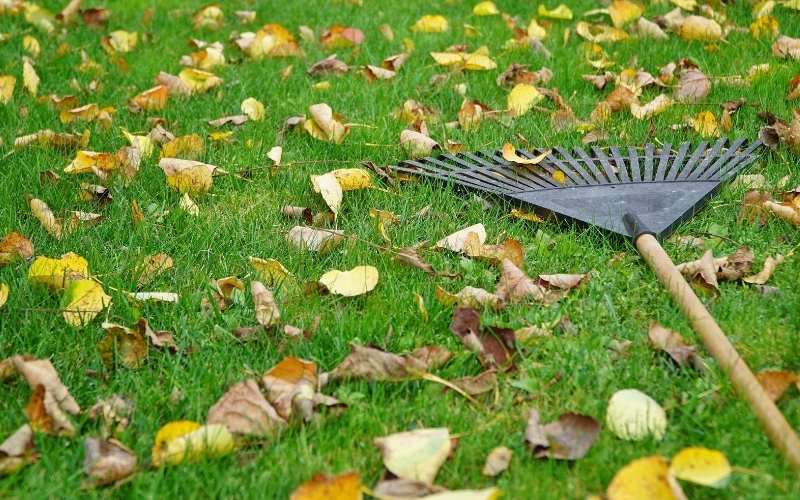
It’s a lightweight rake shaped like a fan with springy, flat tines extending outwards, which helps for collecting fallen leaves. Further, you can use it to remove dead grass in the winter season. Without spoiling the grass and digging into the turf, this tool’s design enables you to skim over the ground smoothly.
14. Weed Puller
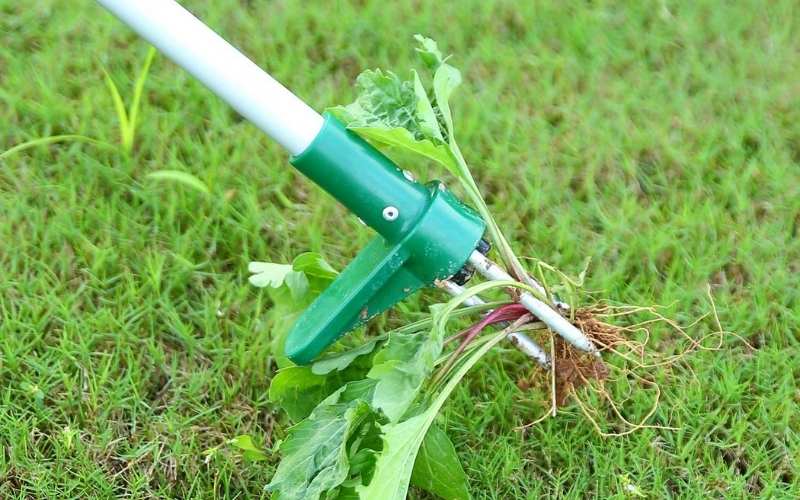
Weeds quickly spread over a garden if not pulled out on time. A hand weed puller is very easy to use, helping you pull out distinct standing weeds from the soil. Also, manually pulling off weeds, one at a time helps prevent any form of damage to other plants in the garden.
Moreover, this tool is designed in a way that you can use it in a standing position while putting minimum pressure on the lower back and knees. Simply, dig the tool in the ground and ensnare the weed roots between its claws. The opened claws will extract the weed from the ground when you compress the lever on the handle.
15. Garden Tiller and Cultivator
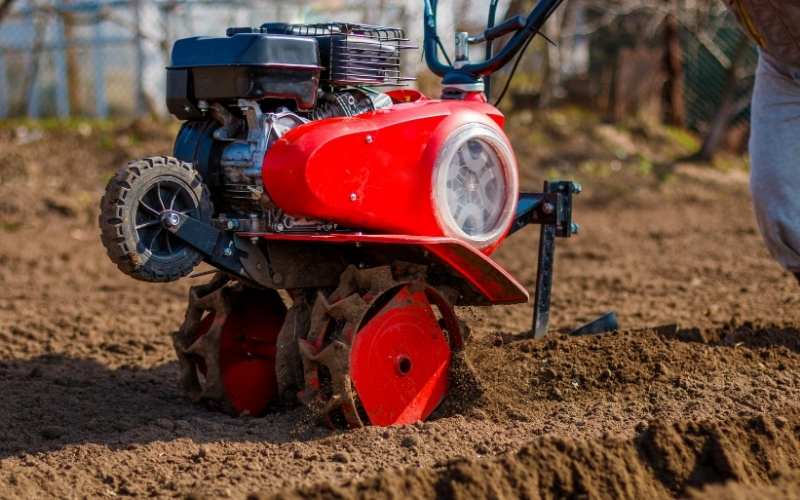
Want to use the hard, compact soil in your lawn for planting? I don’t think so. You’d want to use a garden tiller instead, which will help break it up into loose soil. It also mixes up loose dirt with compost to make it perfect for planting.
These heavy-duty tools are very good for preparing garden patches and flowerbeds. It allows you to create the perfect soil conditions for the growth of your plants. Thus, if you really want your plants to get off to a good start, then getting a good tiller and cultivator is necessary.
16. Dandelion Digger
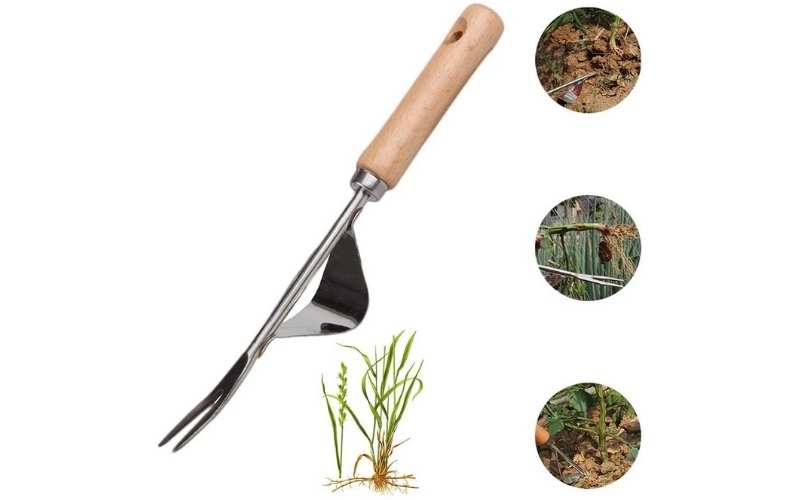
Well, you might have got a hint of why you need this tool from the name itself. It helps remove tough dandelion weed from the ground in your garden. Generally, it seems like a large screwdriver, and the digging end formed like a fish-tail.
Without much effort, you can eliminate vast portions of the dandelion root at once using a dandelion digger with minimum damage to neighboring plants.
17. Pruning Shears
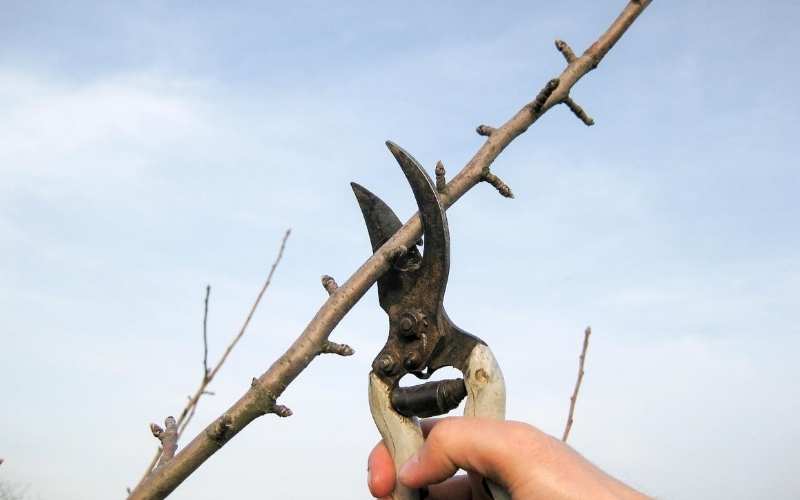
Tree branches do have a habit of growing all over the place. With a good pair of pruning shears however, you can keep them in check.
It’s ideal for cutting plant stems and light branches with ease. Whether you’re an experienced gardener or you’re just starting out, a good pair of pruning shears will certainly serve you well.
18. Loppers
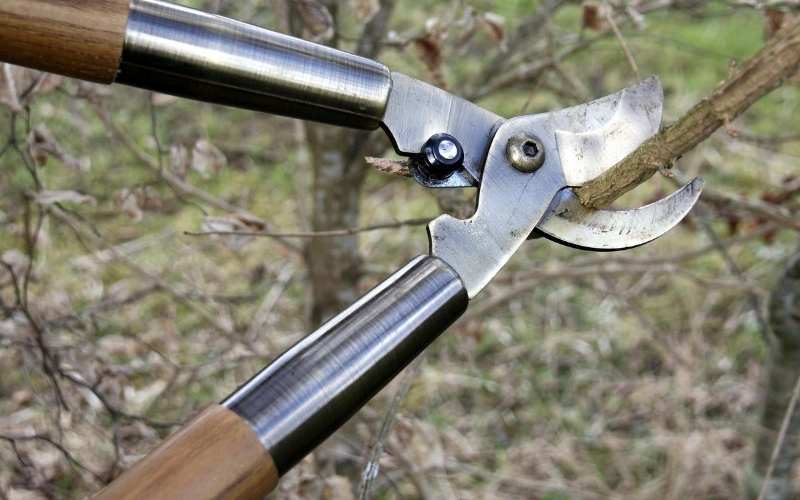
This gardening tool looks and works like big scissors to prune twigs and thick branches that are 2 inches or less in diameter. It has a long handle with a front end looking like a beak that does all the slicing job.
Unlike a scissors though, you need both of your hands to operate this important it.
19. Pruning Saw
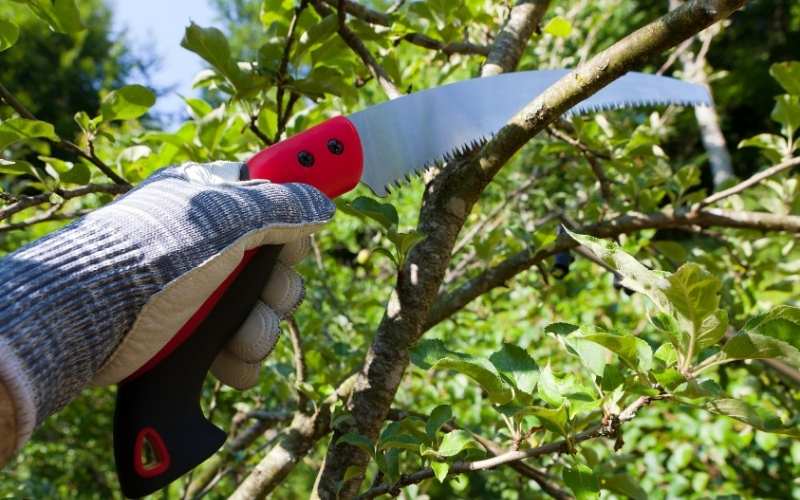
Do you need to cut bigger than ½” in diameter branches? Enters the pruning saw. It has more cutting power which makes it suitable for pruning larger branches. Handheld pruners will fail to do this job appropriately. It cuts on the pull stroke, offering you outstanding control while sawing thick branches.
20. Garden Hose
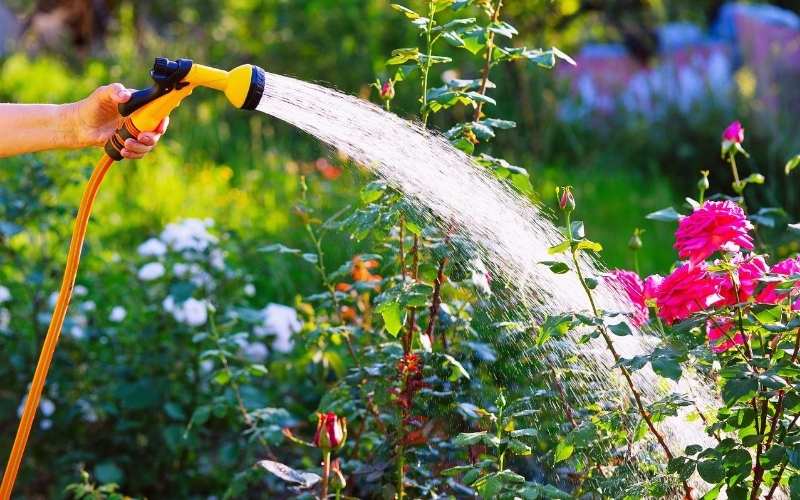
Plants need water to survive. They can start to wither if there’s not enough water in the soil.
Thus, you must invest in a sturdy garden hose to supply much needed water. Hoses come in three primary diameters, i.e., ½-inch, 5/8-inch, and ¾-inch. So, choose the one as per your yard requirement.
It is recommended to buy an adjustable nozzle to control the spray radius as well as water pressure. Also, it is better to select a rubber hose as it will serve you longer compared to the rest.
21. Watering Can
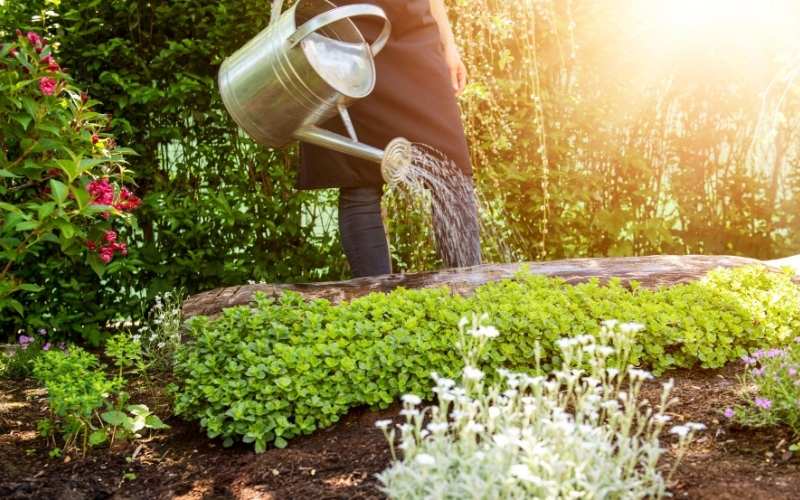
Any list of gardening tools is incomplete unless there’s a watering can included in it. A watering can with a sprinkler attachment allows you to supply a sufficient amount of water to your flowers and plants. The sprinkler attachment allows you to control the water flow as per the need of the plant and soil.
22. String Trimmer
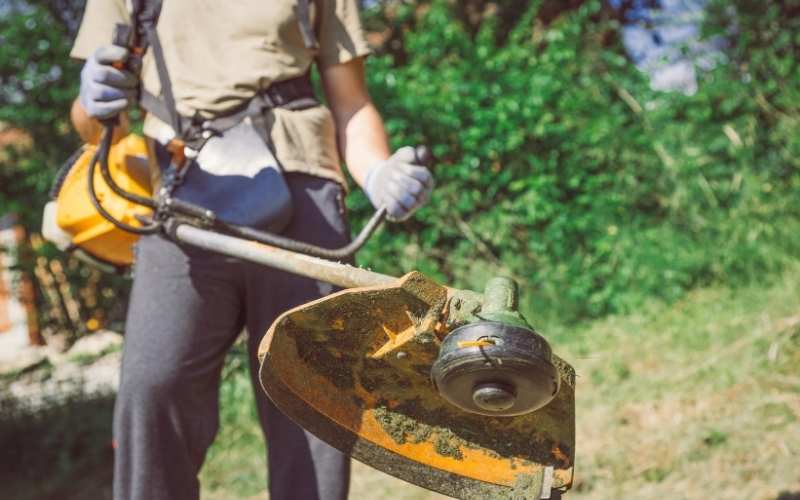
Use a string trimmer to trim the grass in the areas that are difficult to reach with a lawn mower, such as under decks, fence, or near delicate shrubs and plants.
This gives your garden a neat and tidy appearance.
23. Lawn Mower
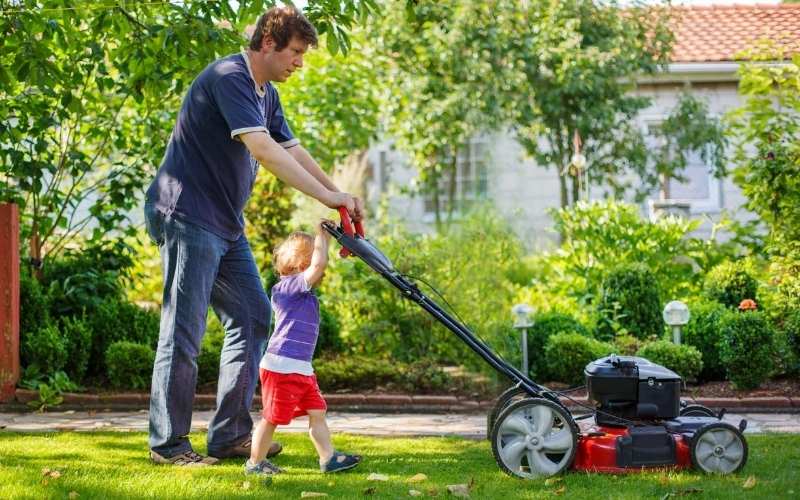
As a gardener, every now and then you’ll need to mow your lawn. None of the tools mentioned above can get the job done for you.
What you need is a good lawn mower. There are different types of mowers you can get for your lawn.
If you have a very big lawn, a riding lawn mower is ideal for it. You can use self-propelled walk behind lawn mowers for big lawns as well as smaller ones.
You also have the choice to choose between a hand powered or manual lawn mower and electric or even a gas powered one.
Still, if you don’t want any trouble of mowing the lawn at all, you can always opt for a robotic lawn mower to get the job done for you on a regular basis.
Your choice will likely depend on the size of your lawn, your budget and how much time you have to spare to get your lawn mown by yourself.
24. Leaf Blower
In autumn, a leaf rake is not enough to clean a large lawn full of fallen leaves. Thus, you should look forward to buying a leaf blower as well.
These are available as electric-powered and gas-powered models. It’s also the best option to gather leaves from smaller and less accessible spots such as around rocks or at the base of the fence.
25. Edgers
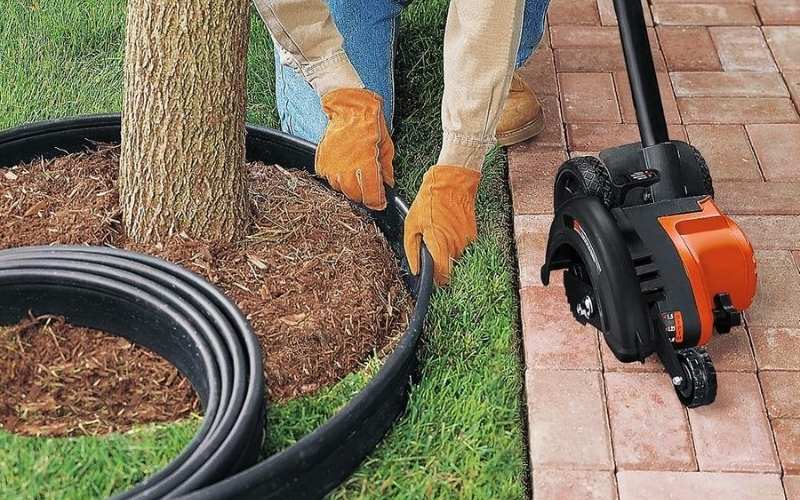
Another must-have tool that gardeners must have in their shed is the landscape edger. There’re different types of lawn or landscape edgers. Some are electric or gas powered, others are manual.
Edging your lawn, patio, flower beds, driveway and walkway helps define their shape and keeps everything around geometrically beautiful.
So, mowing your lawn is not enough, edging it is also very important. That’s why you need a good landscape edger to help you easily carry out this important gardening or landscaping task.
26. Dibber
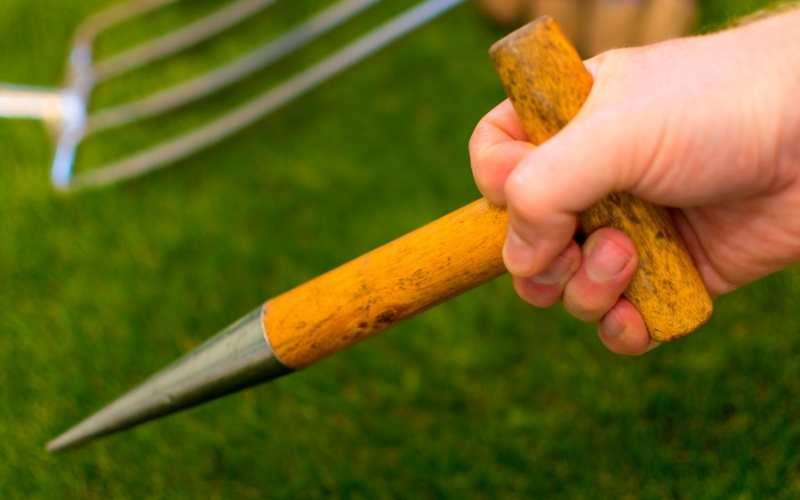
It might not look like much, but a dibber is another important gardening gear you’ll find quite indispensable once you start using it.
It’s a pointed wooden tool you can use to dig holes in the ground for planting seeds, seedlings and small bulbs.
A dibber is a very simple tool. In fact, you can easily make one yourself by following the video below or if you want to, you can just buy one online.
They come in variety of shapes and designs which include L-shaped dibber, trowel dibber, straight dibber and T-handle dibber.
27. Hand Gloves
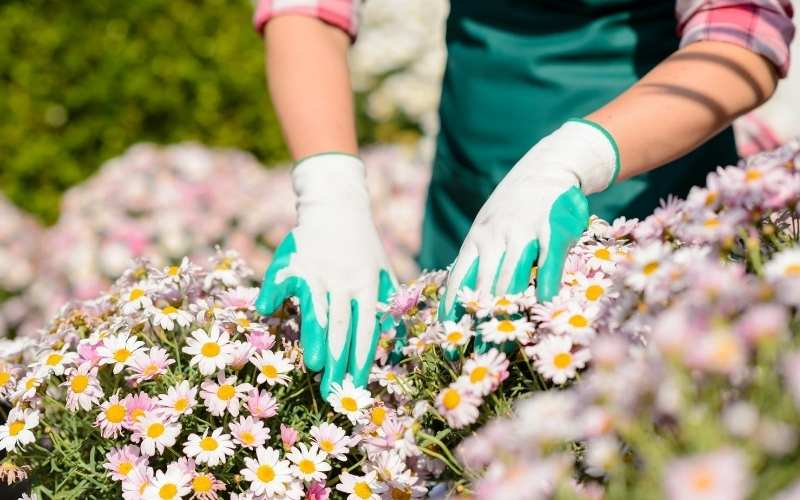
Watch your hands! Gardening means handling those annoying and unpleasant splinters and thorns. So, make sure to wear a good pair of hand gloves to prevent yourself from any injury while tending to your beautiful garden. You don’t want to see sore and irritated hands after fulfilling your gardening passion.
You will find an assortment of hand gloves specially designed to offer better protection and comfort while you’re sifting through the soil or while handling plants.
28. Footwear/Boots
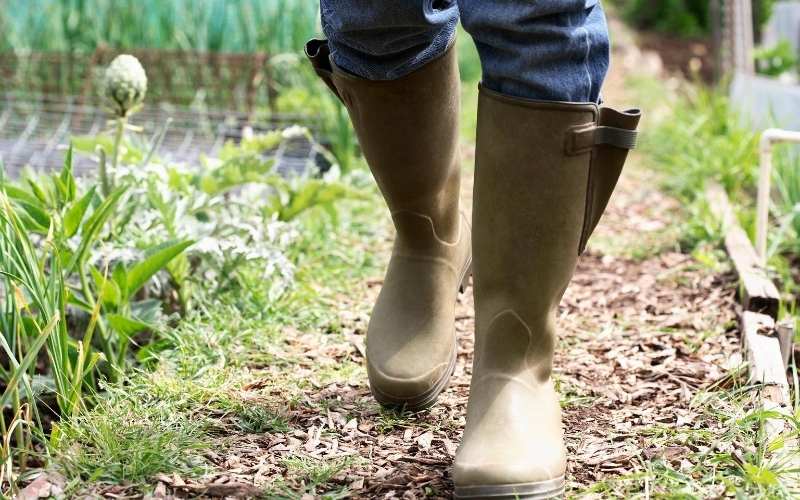
It’s always a good idea to wear boots while working. Getting into the puddles of mud or unknowingly pricking thorns in the foot can be quite painful. So, go for durable, water-resistant, and easily washable footwear that’s ideal for wearing when the backyard is wet, muddy, or snowy.
29. Garden Fork
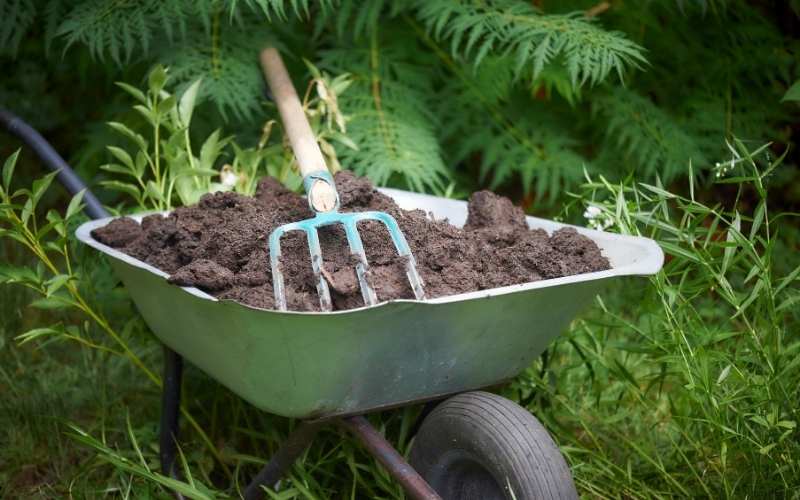
When the shovel can be too harsh for the tender plants, replace it with the garden fork to penetrate hard soil! Professional gardeners use a garden fork for loosening up the ground soil. It is also useful to dig around plant roots carefully.
Those rigid tines on it looks like a fork in your kitchen. Nevertheless, it’s not for having your meals.
30. Garden Scissors
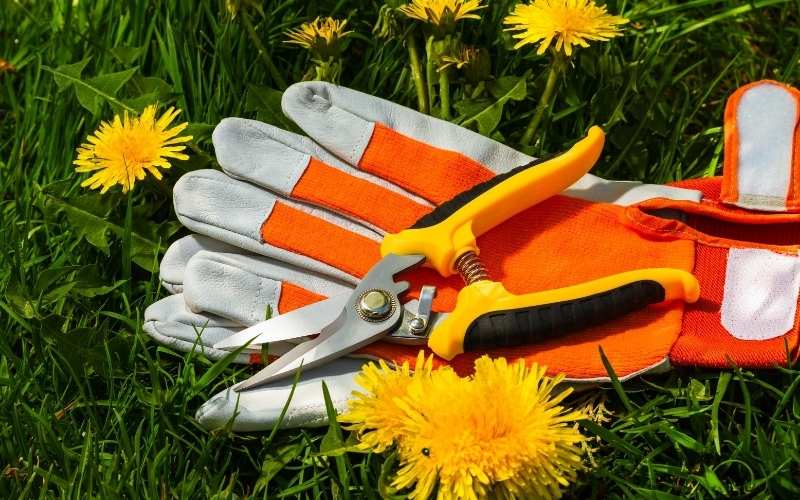
Garden scissors are different from the normal scissors in your closet drawer. It’s a very versatile tool you can use for opening seed packets, pruning flowers and so on.
31. Garden Kneelers
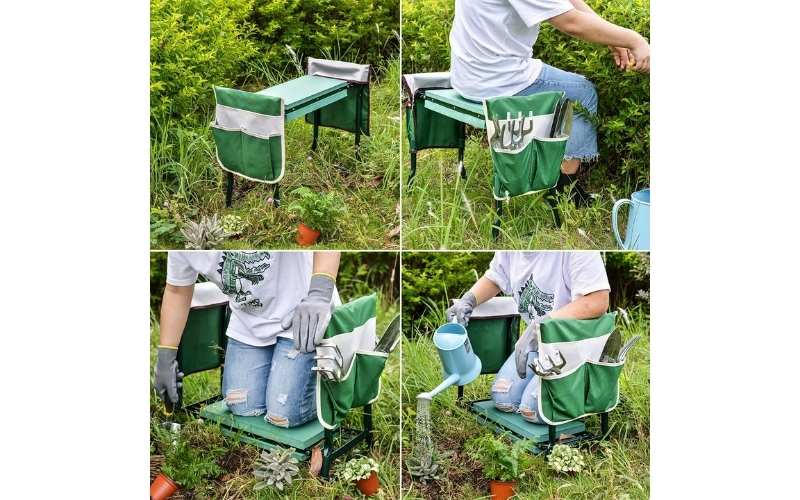
Sometimes, taking care of your garden requires you to kneel down on the ground. With a good garden kneeler like the one shown above, you can kneel down on a soft comfortable pad while tending to your plants. It will protect your knees and clothes.
The one above also doubles as a bench when turned upside-down, and it has tool pockets you can use to store simple hand tools as you sit and carry out simple tasks.
32. Soil pH Meter
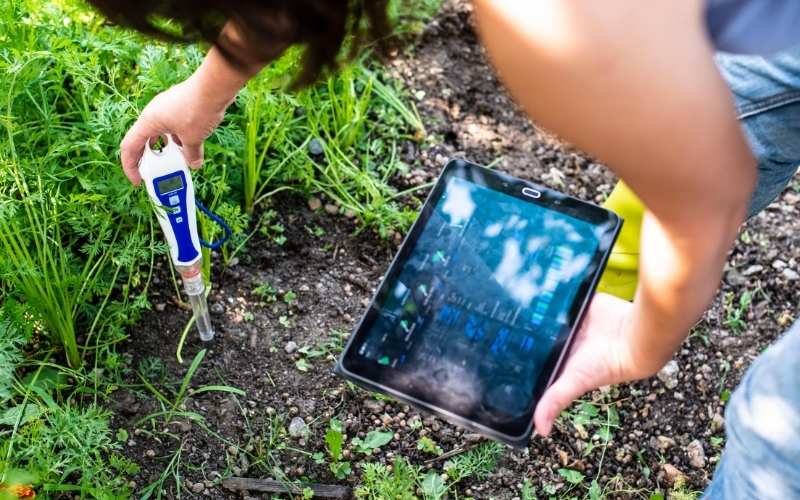
It is the cornerstone of your garden tools list. As a professional gardener, you need to check the pH levels of the soil regularly for the proper growth of the plants. Make this process quick and convenient by using a soil pH meter.
The electric equipment is simple to use. Insert it into the soil water, and view the pH reading directly from a display screen. The pH value of your soil ranges from very acidic, slightly acidic, very alkaline, and slightly alkaline. By knowing this value, you’ll get an idea of the type of plants you can cultivate in the soil or how to adjust the soil to suit the types of plants you want to grow.
